
Every week a brand owner from Newport Beach, Irvine, or somewhere else in Orange County asks us the same thing: everyone claims to do AI content now, so how do I tell who is real? Fair question. We are an AI-native agency based in Costa Mesa, so we have a stake in the answer. Here is the honest version, including what to ask us.
What an AI Agency Actually Does
A traditional agency rents cameras, crews, locations, and weeks of post. An AI-native agency replaces most of that with a generation pipeline: direction, promptcraft, reference control, edit passes, and finishing. The output is the same category of asset (commercials, brand films, product shots, social cuts) at a fraction of the cost and timeline.
The part that does not change: taste, strategy, and accountability. If a shop's pitch is all model names and no ideas, you are buying a tool subscription with a markup, not an agency.
The Receipts to Demand
Ask for named clients, real view counts, and work you can watch. Here are ours, so you can see what a real answer sounds like:
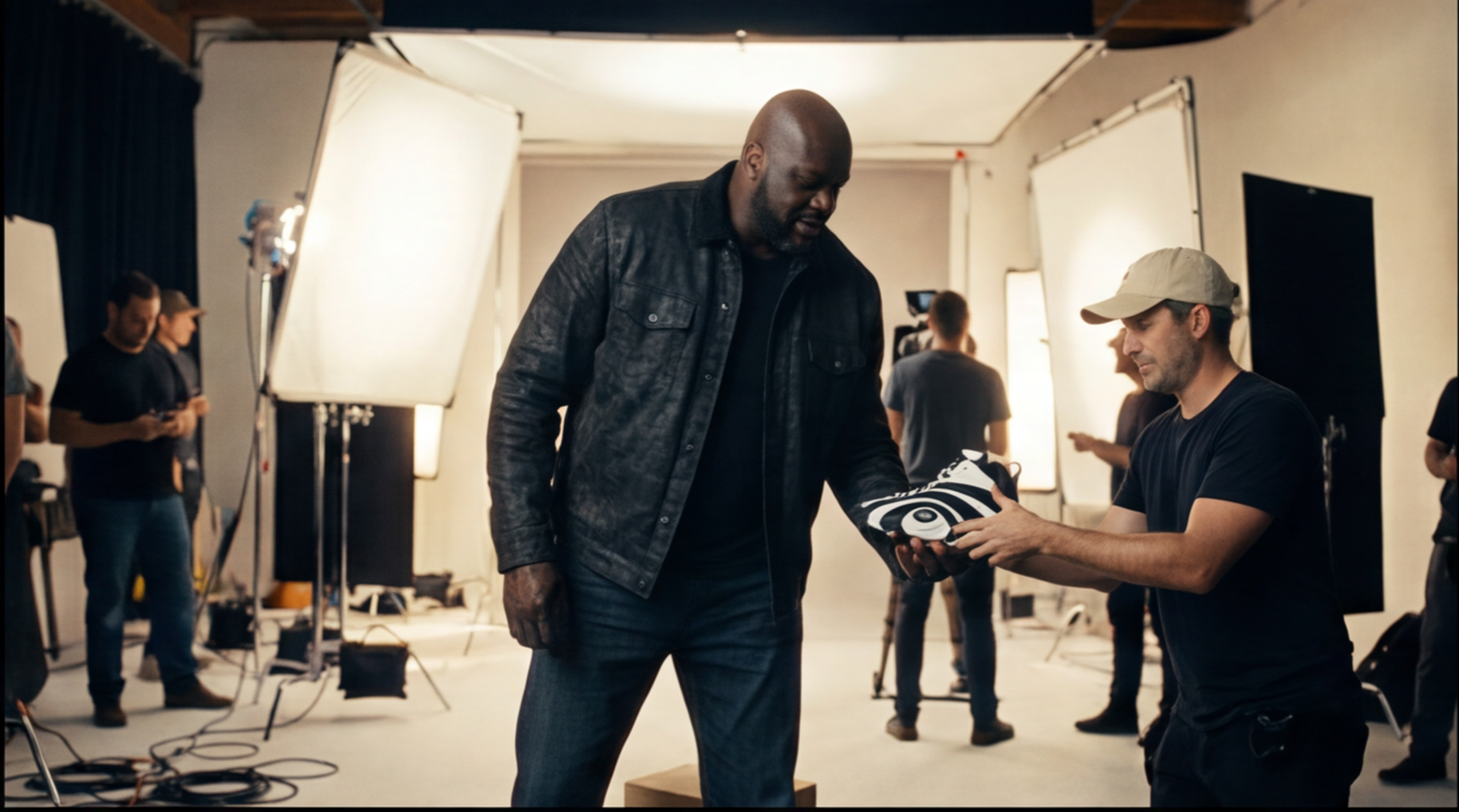
- A Shaq sneaker commercial made without a camera, broken down shot by shot in our Shaq teardown.
- A $49.9M listing marketed with AI-generated dogs for the Altman Brothers, covered in this breakdown.
- Dealership spots for Paragon Honda and legal marketing for Sweet James, a Newport Beach firm, at our work.
- 40M+ monthly views across the social channels our founding team runs, and an original series that pulled 15.2M views on its social release.
If an agency cannot point to work this specific, with numbers this checkable, they are selling you a demo.
What It Should Cost
Traditional commercial production in LA and OC routinely runs from the mid five figures into six, before media. AI-native production collapses the crew and location line items, so the same deliverable lands far lower, and the savings scale with volume. We published the real line-item math in AI video production vs. traditional production.
For ongoing content, expect retainers in the $15-25K per month range for serious, multi-asset programs. Anything dramatically cheaper is usually templated output; anything dramatically more expensive should come with named senior people on your account.
Five Questions That Separate Real Shops From Wrappers
- Show me your pipeline. Who writes the prompts, who directs, who finishes? A real shop answers in job titles, not software names.
- How do you keep a face or product consistent across shots? There is a right answer (reference control and lock sheets) and a shrug.
- How do you handle likeness and rights? If there is no process, walk away.
- What happens when a generation fails? Pros have edit passes and fallback shots; amateurs have excuses.
- How fast is a revision? AI-native should mean days, not weeks.
Red Flags
- Placeholder stats and round numbers with no client attached.
- A reel of stock-looking AI clips with no brand, no brief, and no story.
- No physical presence. An agency claiming OC or LA roots should be able to meet you there.
- Promising virality. Nobody honest guarantees views; they show a track record.
- Ownership fog. You should own your finals, full stop.
Why Local Still Matters in an AI Workflow
Generation happens in the cloud, but direction happens in person. Being in Costa Mesa means we sit with clients in Newport Beach, Irvine, and across Orange County the same day, shoot local reference plates when a spot needs a real location anchor, and work your hours. Orange County brands are already using this to outmarket bigger competitors, as we covered in how OC brands are using AI video.
Conclusion
If you are evaluating AI agencies in Orange County, Newport Beach, or LA, put us through these same questions. Browse the case studies, watch the work, then talk to us. We are at 200 E Baker St in Costa Mesa, and we will show you the raw frames, not just the reel.