
Legal advertising is the most formulaic genre on television. Serious voice, courthouse steps, "we fight for you," phone number in giant type. And in California, it just got harder to make: SB 37, effective January 2026, expanded what counts as legal advertising and raised the penalty for getting it wrong.
Sweet James, one of the most recognizable law brands in Southern California and a Newport Beach neighbor of ours, wanted a campaign that would break through culturally without a single risky claim. So we made them one, and the strategy behind it works for any brand in a regulated category.
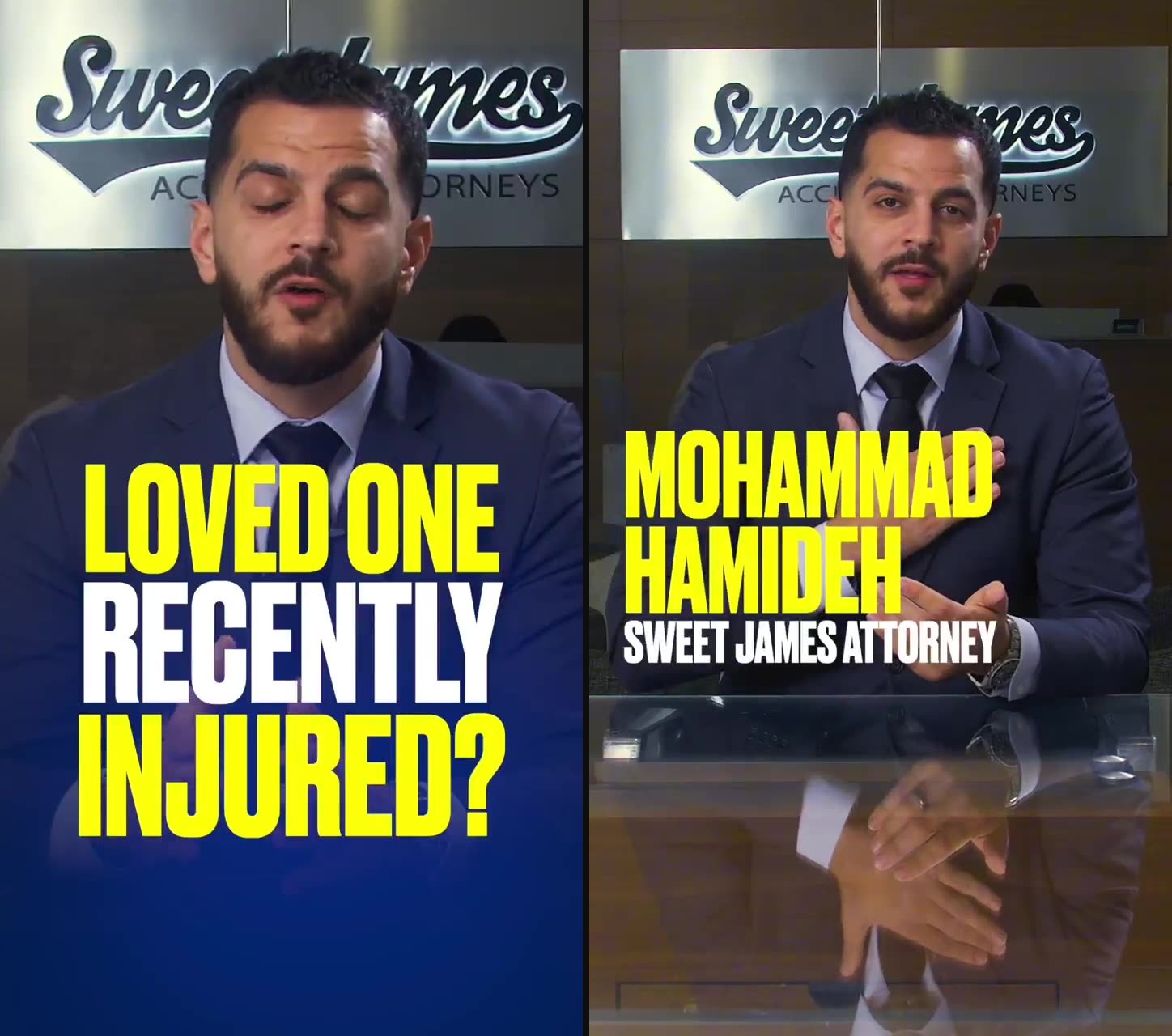
Real frames from a live Sweet James spot. The attorney on camera is identified by name, on screen. That is not style; that is the law, designed into the frame.
The Rules Changed
California has always regulated legal advertising tightly. SB 37 expanded the definition of "advertisement" to cover nearly every media format, from websites and videos to social and digital ads, and it raised enforcement risk by letting consumers pursue violations directly. Under the law, legal advertising cannot include:
- Predictions or guarantees of success
- Misleading or unverifiable claims about experience or results
- References to past case outcomes unless objectively substantiated
- Pay-to-play awards or recognitions
- Improper referral relationships
Penalties run from statutory damages to attorney’s fees to injunctions. For a brand with dominant freeway billboard presence, the exposure is enormous. Most firms responded the way the category always responds: get more cautious, more generic, more invisible.
The Insight: Regulation Can't Restrict Emotion
Here is the strategic unlock. Most legal ads rely on proof points: verdicts, settlements, years of experience. But in a heavily regulated environment, proof is liability. Every number is a claim, and every claim is a risk.
So the campaign stopped selling proof and started selling feeling. Confidence. Relief. Reassurance. The feeling of having Sweet James in your corner. Regulation can restrict what you assert. It cannot restrict what people feel, and memorability has never come from legal language anyway. It comes from cultural resonance.
The Big Swing: A Music Video, Not a Testimonial
Instead of another testimonial-driven commercial, we built the campaign around a full-scale music video: culturally disruptive creative that prioritizes emotional storytelling over factual assertion.
Music is a memory device. By sampling a widely recognizable rhythm inspired by a-ha’s "Take On Me," the campaign bought instant familiarity and stickiness, the kind of recall legal brands never get, without making a single claim the law could touch. Every required attorney identification and compliance element was included, clearly. Bold creative, zero risky claims. That combination is the entire point.
The Compliance Machinery Is the Creative
The music video is the headline, but the discipline shows up in the everyday ads too. Look closely at the frames below from a Sweet James spot and you can see the machinery working:

Every staged scene carries a persistent DRAMATIZATION label. Not a disclaimer buried at the end: a super glued to the frame.
- DRAMATIZATION supers ride on every staged scene, so no viewer can mistake a reenactment for a real client.
- Attorney identification is explicit: the attorney on camera is named, on screen, as a Sweet James attorney.
- No outcome promises anywhere. The scripts sell process and protection, and every compensation line is hedged the way the law demands: the compensation you may deserve.
- A full disclaimer end card: attorney advertising disclosure, no-guarantee language, jurisdiction notes.
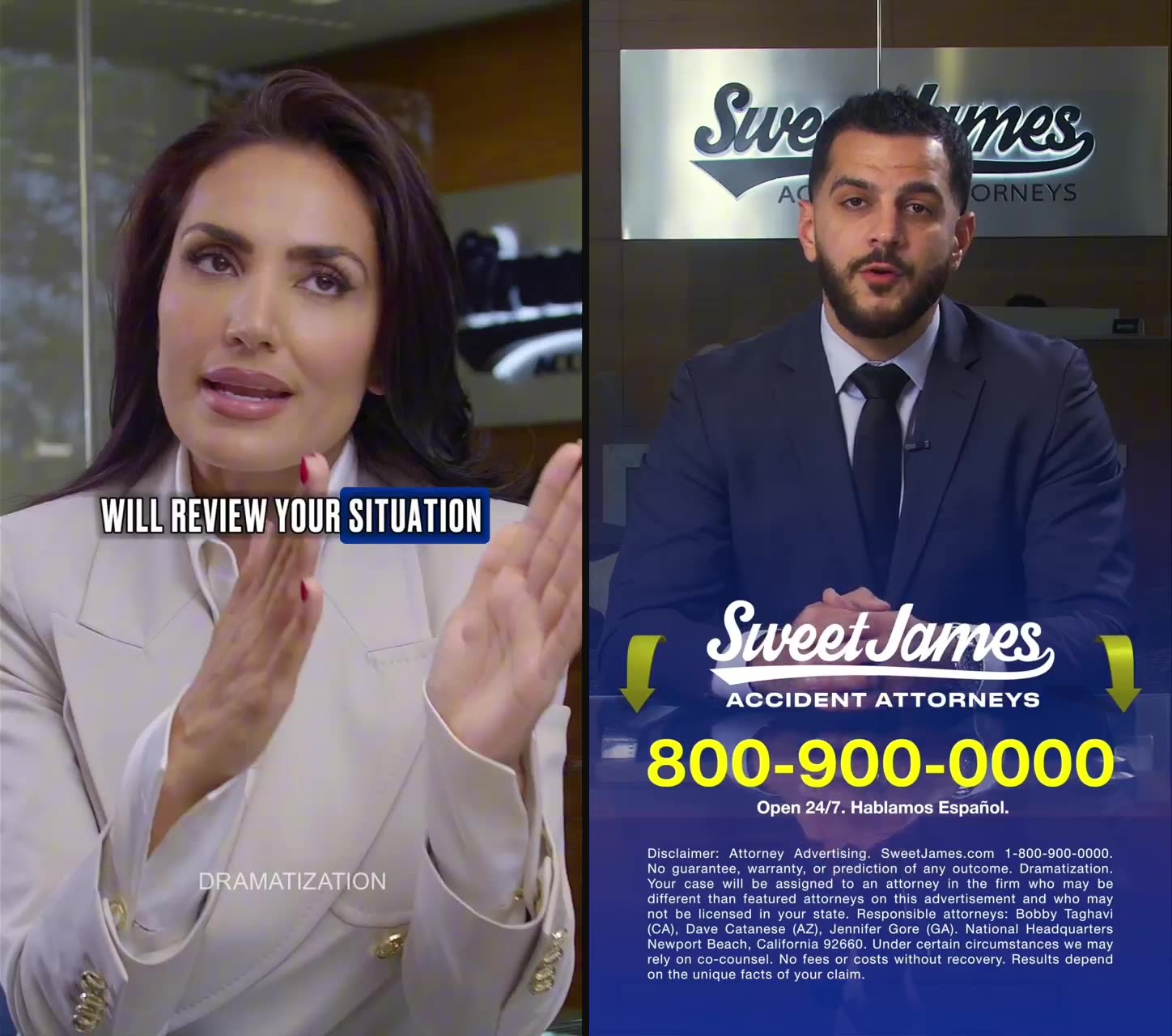
The close: a full compliance end card. Attorney advertising disclosure, no-guarantee language, the works.
The Craft Details Nobody Sees
Compliance is the floor, not the ceiling. The same spots are engineered for performance with the same care as the concept:
- Framing for placement. Full upper body on camera, never a tight face crop, so the shot survives every crop Meta serves.
- Subtitles mid-frame. Captions sit high enough that reel engagement buttons never cover them.
- Two cuts of everything. 4:5 and 9:16 for full placement coverage, with 4:5 as the workhorse.
- Split-tested CTAs. Even the word "consultation" gets A/B tested against "evaluation" and "review."
This is what "fully compliant and fully optimized" looks like when it is done as one discipline instead of two departments fighting each other.
What Regulated Brands Can Steal
You do not need to be a law firm to use this. Any brand in a regulated category, legal, medical, financial, insurance, can run the same play:
- Inventory your claims before you write a single line. Every proof point is a liability until legal clears it. Start from what you cannot say.
- Sell the feeling, not the fact. Confidence, relief, safety. Feelings do not require substantiation.
- Use music and format as memory devices. Recognition is a legal asset. Nobody can regulate a melody out of your customer’s head.
- Build compliance into the creative, not around it. Supers, IDs and disclaimers designed as part of the frame beat a disclaimer dump at the end.
- Treat craft as non-negotiable. Regulated does not mean boring. It means the boring parts are handled so the bold parts can breathe.
Conclusion
The Sweet James campaign proved a simple thesis: you can be the boldest brand in the most conservative category, as long as compliance is a design input instead of an afterthought. That is now the blueprint for post-SB 37 legal marketing in California, and we wrote it from Costa Mesa.
No ID is an AI content agency in Orange County building bold, fully compliant creative for law firms and regulated brands from Newport Beach to Los Angeles and beyond. Browse our work, see how we approach creative and design, or start a conversation.